 Cities and public spaces
A smart city
for the people in it.
Sensors and data aren't enough: a city is smart when each person gets what they need wherever they are. Placenet gives the whole city, every neighbourhood and every park, library or facility its own digital layer, for residents, visitors, local businesses and council services.
Places full of life.
Digitally absent.
You decide the places, who's who and what each person sees.
Placenet gives every place in the city its own digital space. From there, each person's phone adapts on its own.
You define the places
The whole city, a neighbourhood, a park, a library or every stop on a route.
You decide who's who
As many roles as you need. One person can have several.
You choose what they see and can do
In each place and for each role, the right apps and content.
They come in through a single access point
Whatever the channel, Placenet knows where each person is and who they are.
 Water cut tomorrow from 9 to 12Only on your street
From the whole city to a single space.
This is how a person's phone changes as they move around the city, a park or a library. Nobody touches a thing: the place changes, and so does what they see.
Example apps, made up. Your city's will carry its own brand, its colours and whatever design it imagines.
A demo on real maps where you move the person around and switch roles.
From the park to the library.


Parks of the Future · Parc d'Orriols
A public park in Valencia turned into a digital community: a place to connect with the people who share it and tackle unwanted loneliness, with information, safety and maintenance by area, and data for the city.
- Community and connectionchats and a wall to meet the people who share the park
- Tackling unwanted lonelinessactivities and groups for older people, families and young people
- AI assistantanswers and recommends based on profile and area
- Securitygeolocated alerts, connectable to the police or 112
- Maintenanceissues with their location, sent straight to the department
- Data for the citypark usage, with anonymised metrics
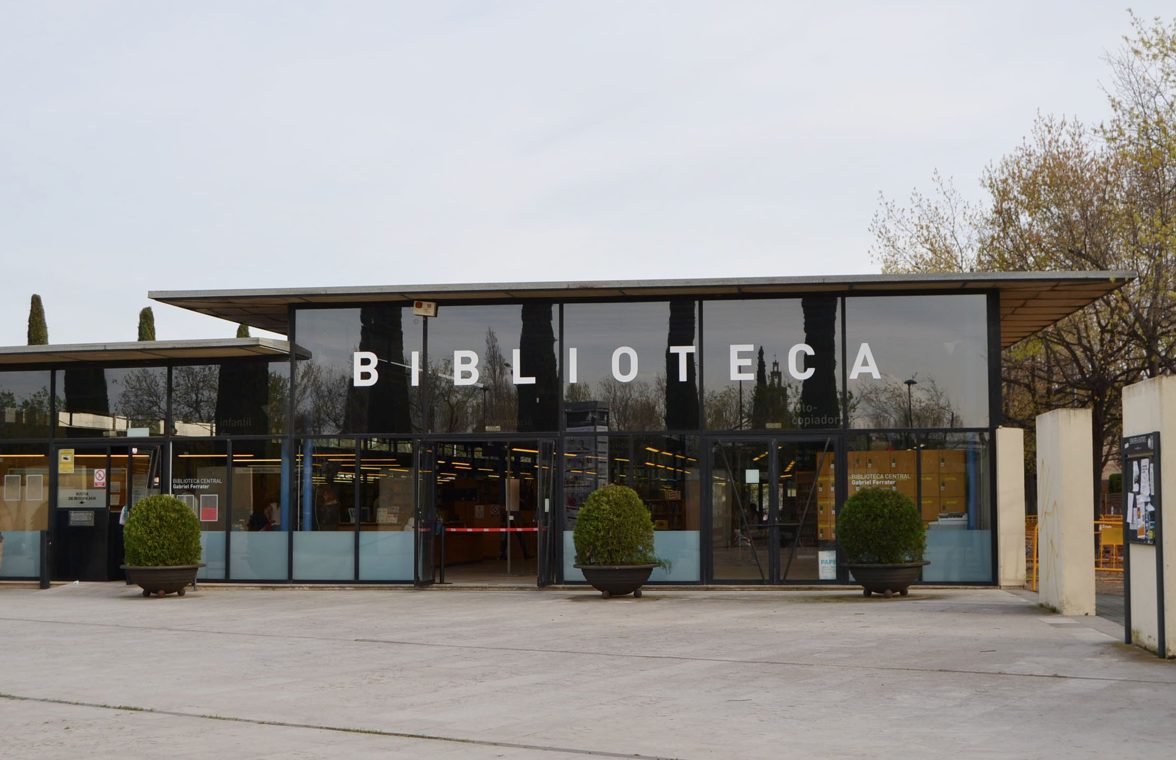



Biblionet · Biblioteca Gabriel Ferrater
The library, on the phone of whoever is inside: it finds a book and guides you to its shelf, answers questions and opens up a space to take part. With the support of the Generalitat de Catalunya.
- Smart searchfinds a book and guides you to it inside the building
- AI assistantthe Gabriel Ferrater assistant answers instantly
- Community walltexts, images and videos from users
- Staff dashboardusage and footfall for each space
Everything you can switch on in your city.
- Alerts
 Information
 Map
 Schedule
 Bookings
 Incident reports
 Participation
 Services
 Appointments
 Routes and guides
 AI assistant
 Neighbourhood wall
 Emergencies
 Mobility
 Weather
 Analytics
 e-Government portal
- Issue management
- Sensors and IoT
- Open data
- Facility bookings
- Census and procedures
- City platform
 Citizen services
What people usually ask us.
Is it for the whole city or a single space?
Both. You can start with a park, a library or a facility and grow to the whole city, with everything in the same place.
Do we need yet another app?
No. It integrates into the council app you already have, a new one is published under the council's brand, or it works as a web app with a QR code, with nothing to download.
Does it integrate with our systems?
Yes: e-government portal, issue management, sensors, open data or any other platform. Placenet connects; it doesn't replace.
What data does the council get?
Footfall by space and time slot, participation, service usage and issues, always aggregated and anonymised, live and in reports.
How is privacy protected?
Placenet complies with the GDPR and Spain's LOPDGDD. The data belongs to the council, and anything that only makes sense in one place stops being available when the person leaves.
Your city's places, ready to come alive.
Tell us where you'd like to start, the whole city, a neighbourhood or a specific space, and we'll show you how it would work.
Prefer to write to us? [email protected]